
How Data Drives Motivation in High School Athletes
Staff Writer from Coach and Coordinator Network, Originally Published on March 4, 2026 here.

It’s the fourth quarter in November. Your kids look gassed. You ask yourself the same question every football coach asks: Did we train with enough intent in February to win this moment in November?
If you want the real answer, you need more than a gut feeling. You need proof. This is where data comes in, it motivates high school athletes and changes the game.
At Olentangy Orange High School, Strength Coach Jason McKendrick built a championship culture by combining high standards with measurable feedback. The result? Athletes don’t just work hard; they compete every rep because the numbers push them.
Why Measurable Performance Increases Athlete Buy-In
Coaches preach effort. However, athletes want evidence of growth.
McKendrick understands this situation. He doesn’t use a “Top 10” board or just encourage. Instead, he provides athletes with immediate proof of their progress.
“If they’re working their butt off, they want to see the results.” (20:38)
That statement cuts to the core of motivation.
When athletes record sprint times, velocity outputs, or jump metrics, they see real progress. This makes their effort personal, and accountability increases because the numbers are honest.
Instead of waiting six weeks for a max-out day, Orange athletes compete every week. They go after personal records in fly 10s, vertical jumps, and velocity-based lifts. As a result, Tuesday mornings in February feel just as important as playoff Fridays.
Data turns training into competition.
Using Performance Tracking to Fuel Competitive Culture
Football players love to compete. Great coaches use that drive every day.
At Orange, athletes enter their performance numbers and instantly see their rankings. This system doesn’t replace coaching; it makes it even more effective.
“I’m coaching the reps, I’m in the racks with them.” (19:46)
With technology handling the tracking, McKendrick can focus on intent, mechanics, and effort. At the same time, athletes compare their results in real time.
As a result:
Effort increases.
Focus sharpens.
Standards rise organically.
Measurable performance also removes excuses. If the velocity drops, the athlete sees it. If sprint times get better, the athlete owns it. This kind of visibility builds internal motivation.
In other words, the scoreboard moves from Friday night to every training session.
Teaching Intent Through Athletic Data Analytics
Many coaches struggle to teach intent. You can yell “Move it faster,” but a 15-year-old may not understand what that means.
However, numbers make expectations clear.
When athletes perform RSI jumps or velocity-based lifts, they receive immediate feedback. Because they see the output, they modify their effort instantly. Over time, they learn what explosive intent feels like.
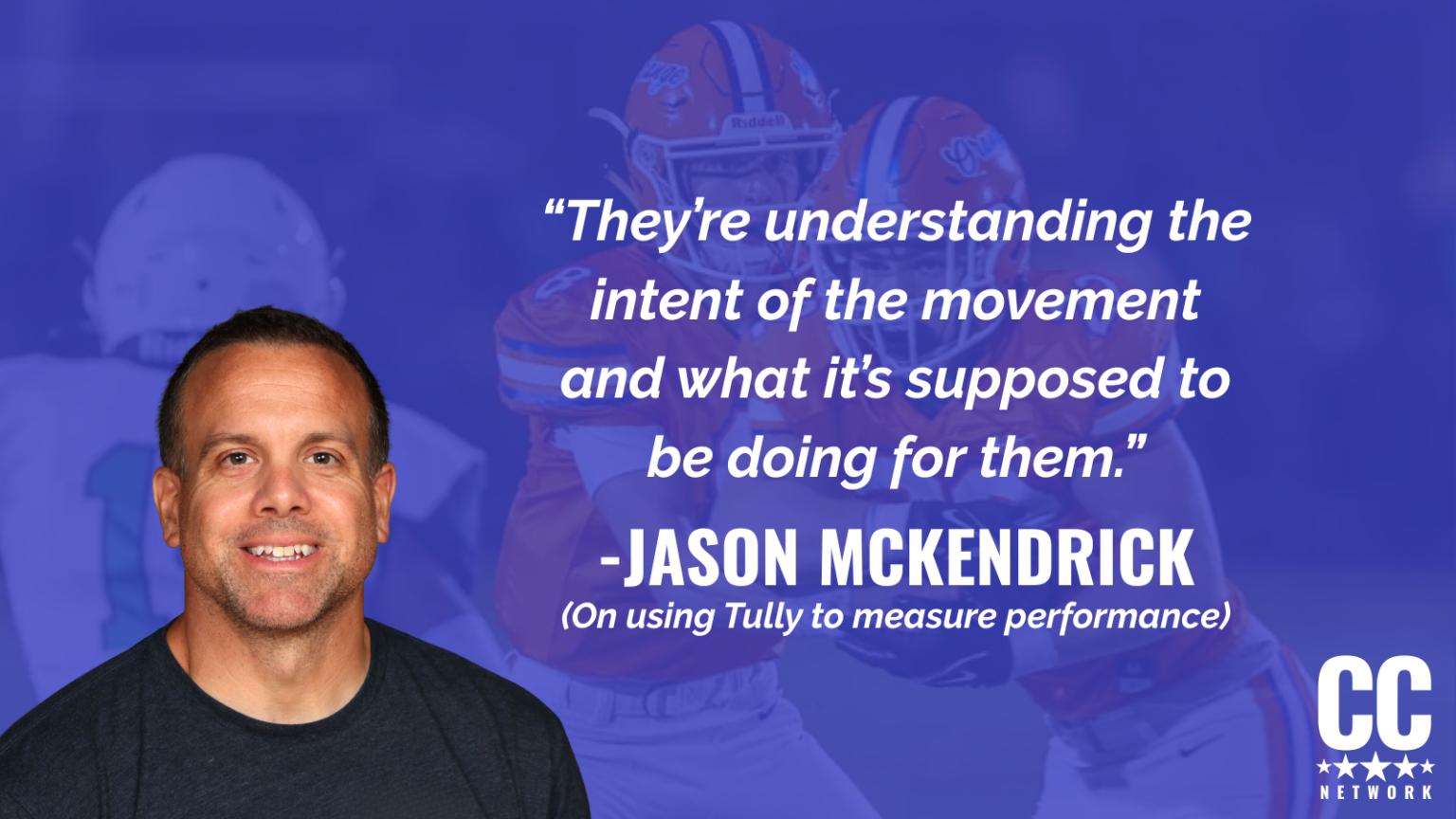
“They’re understanding the intent of the movement and what it’s supposed to be doing for them.” (33:03)
That understanding builds physical literacy. Also, it builds ownership. Instead of depending on constant coaching cues, athletes self-correct because the metrics guide them.
As a result, development accelerates.
How Data-Driven Training Prepares College-Ready Players
High school athletes often struggle to adjust to college strength programs. But programs that focus on tracking help remove that learning curve.
At Orange, athletes graduate knowing:
How to interpret performance trends
How fatigue impacts output
How recovery affects results
How to compete without constant supervision
Since they train in a data-rich environment, they progress easily to the next level.
In fact, McKendrick often hears from alumni who walk into college weight rooms with confidence. They already know how to be accountable, pursue physical results, and value measurable performance.
That preparation doesn’t happen by accident. It happens because coaches commit to using data to drive motivation year-round for high school athletes.
Why Football Coaches Should Embrace Data Now
Some coaches fear making the weight-room process too complex. Others worry about losing the “old-school edge.”
But data doesn’t make programs softer. It actually makes them sharper.
When athletes see proof of improvement:
They compete harder.
They recover smarter.
They trust the process longer.
Measurable standards help build a strong culture. That culture, in turn, leads to winning.
If you want to build persistent success, you must connect effort to evidence. That connection defines how data drives motivation in high school athletes at elite programs.
Track and improve your athletes progress with Tully!
Schedule a meeting to learn more about Tully today!